


Edward Eagles Sr. & Nancy Jane Scarborough Eagles, Winn Parish,
LA
Submitted by Karen Reaves Moss, 948 Vintage Dr., Kenner, LA
70065-1982
HISTORY OF EDWARD EAGLES, SR. AND NANCY JANE
SCARBOROUGH EAGLES FAMILY
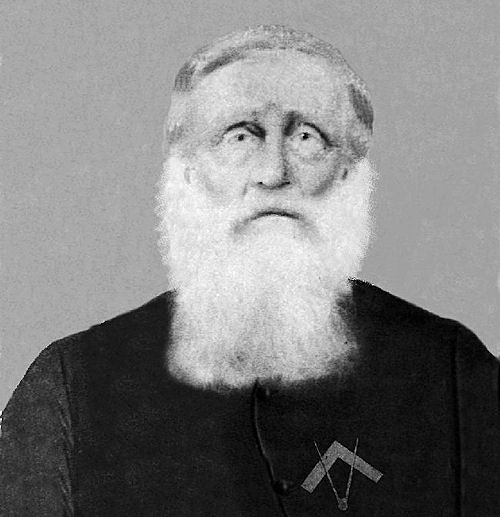
BY: BESSIE EAGLES WILSON
(1905-Aft.1966)
Edward Eagles, Sr. was born November 24, 1819
at Birmingham, England. He died April 8, 1898 at his home near
Winnfield, Louisiana and was buried in the Winnfield City Cemetery.
His death occurred on Good Friday and his burial was on Easter
Sunday. His youngest daughter, Margaret Emma Eagles Bailey, preceded
him in death by one year, her death occurring April 16, 1897 and
she, too, died on Good Friday and was buried on Easter Sunday at the
Sardis Cemetery near Winnfield. His youngest son, James Scarborough
Eagles, was the third member of the family to die on Good Friday,
March 27, 1964 and was buried on Easter Sunday in the Winnfield City
Cemetery.
Edward, Sr. came to the United States in 1840 at
the age of twenty-one from Birmingham, leaving behind an uncle, the
only remaining member of his family. He landed at New York City and
began making his way southward, working at different places at his
trade as a cabinetmaker, painter and paper hanger, which he learned
by serving apprenticeship in England.
On May 2, 1851, at
Trenton, Louisiana (now West Monroe)in Ouachita Parish, he married
Nancy Jane Scarborough. He met Nancy Jane during the time her family
had stopped there while enroute westward from Alabama. He was 32 and
she was 14.
While living there and possibly before his
marriage, Edward, Sr. worked helping to bury the dead and care for
those stricken when a yellow fever epidemic hit the area. It was a
deadly and highly contagious disease, so it seems it was by the
Grace of God that he survived. He was a very courageous man.
While living in Trenton, four children were born to Edward and
Nancy. The eldest, a daughter, Ismarelda died there when only a year
old. She was named for the ship on which her father had made the
voyage to America. The three sons were Edward, Jr.(called Ted),
Charles and Harry.
In January 1858, the family moved in an ox
wagon to Winn Parish and chose a home-site in the midst of a
wilderness, about four miles south of Winnfield in the Cedar Creek
area. It was here that he lived and reared his family. Other
children were born making a total of ten, all of whom lived well
into their adult years with the exception of a son, Allen, who died
after a short illness when a small child and the daughter already
mentioned. There were four daughters and six sons in the family.
The family lived in a very crude shack until Edward, Sr. was
able to build the log house that stood for many years. After all the
family had moved away, a number of other families lived there. The
logs were dovetailed together making a much stronger house, an
innovation that Edward brought to this part of the country. The log
kitchen stood apart from the house; a safety measure in case of
fire. The kitchen had a large mud chimney and a fireplace, which
served a two-fold purpose; to furnish heat and all meals were cooked
over coals in the fireplace.
In later years, when some of
their children lost their spouses in death, and would return to the
home with their children, Edward and his sons would build another
room onto the house, so that finally about four rooms were added to
the original house. Edward, using his skills as a cabinetmaker made
most of the furniture. These pieces included a large hutch, a
pigeonhole desk, a wardrobe and a library table. Some of these are
still in the possession of members of the family.
Edward Sr.
homesteaded land and bought land until he had about two thousand
acres. Think what a task it must have been to clear that part of the
land to be used to grow crops, by hand, so to speak, with only saws,
axes and other hand tools. It was said of him, "The bigger the task
and greater the challenge, the harder he worked, for he liked the
satisfaction of accomplishment." So it was thus he conquered this
untouched land with its virgin forest. Besides this, he went, at
times, back to Trenton to pursue his trade. He did this, too, before
he built his house, leaving Nancy Jane, who was still a young girl,
alone with her three small children. She recounted stories of times
when severe thunderstorms came and how she could hear the wolves and
other wild animals howl at night, yet, she came through it all and
was such a brave, strong, calm person, a true pioneer.
Edward
Sr., being a progressive person, was the first to own a steam mill,
which furnished power for a small saw mill, a gristmill and a cotton
gin. His family was the first to own a wood-burning stove for
cooking, a sewing machine and an organ in the vicinity of Winnfield.
With people coming to have corn ground for bread and to have cotton
ginned, the Eagles place became a center of activity. Many of those
coming there were invited in to share the noon meal with the family.
It might be well to mention here that in the fall after the
cotton crop was harvested, the bales were taken to Alexandria to a
port on Red River to be sold. A caravan of wagons would set out on
this journey of about fifty miles, with plenty of food and water to
last. They had to stop at a campsite along the way for one or more
nights. After the cotton was sold, purchases of goods that couldn't
be bought in Winnfield was taken back home. The story is told about
once when a barrel of brown sugar was taken back and after being
opened, Edward Sr. and Nancy's youngest son, Jim, who was just a
small boy with a real sweet tooth, set in to eat the whole barrel,
but soon found his limitations.
Edward Sr. became a Blue
Lodge Mason, date unknown, and was a member of Eastern Star Lodge
#1511 F. and A.M. in Winnfield. This lodge was organized in 1852. On
Saturday afternoons, he would dress and saddle his horse, for the
four-mile ride into town; he never missed a meeting. None of his
sons ever joined the Masonic Lodge, but several of his grandsons
were active in Masonic work. Edward Sr. was forty-five years of age
when the Civil War came in 1861. He had severe arthritis, then known
as rheumatism, and could not go into service.
Edward Sr. was
a man of fairly large stature with black hair and blue eyes. He
never lost his English accent. He suffered a stroke and was
paralyzed in his left side for seven years prior to his death. Much
of this time was spent in a wheelchair. He was ministered to with
much love and concern by Nancy, his children, and grandchildren.
In the 1840's and 1850's, Winn Parish was still a sparsely
settled frontier country of both good and bad settlers. They all had
to be rugged to leave the more civilized communities of the eastern
states and come out to the frontier wilderness of Winn Parish and
survive. So it was that this couple, Edward and Nancy, and their
children all stood together, with the highest physical and moral
courage to survive.
It can be seen that Nancy Jane
Scarborough Eagles became the perfect mate for Edward, helping to
overcome all obstacles and making a home where love and loyalty was
the abounding theme. She was deeply religious and imparted to her
children the very highest moral standards. Her great love for her
children was reflected in their deep love and respect for her. This
was shown, in each of her sons, as they manifested a special
reverence for their wives. Not one of them ever used bad words of
any kind, they did not drink liquor or smoke. A special band of love
held the family together in all relationships throughout their lives
and followed through, like a golden thread, into future generations.
The Eagles daughters were taught the art of home making by their
mother and all were expert cooks and seamstresses and kind and
loving mothers. Nancy Jane was a pretty girl and what might be
termed as a very nice looking older woman. She had dark brown hair
and brown eyes, was of medium height and rather stout in later
years. She was revered by all of her children and grandchildren, she
had contributed so much to them.
Edward Jr. (Ted) was the
first to marry, at age 24. He married Joan Long. She was an aunt of
Governor and Senator Huey P. Long and Governor Earl K. Long. They
settled into a home near his parents, but after a time, the family
moved into Winnfield where he had a small grocery store and was
post-master for a time. He built a two-story house on the corner of
Main and Abel Streets in the center of town. They owned a large
brick building that was on a part of this block. They later sold the
house and moved to another part of town after all of their children
were grown. One son, Earl Eagles, was assistant post-master in
Shreveport for a time and one daughter Ocie, worked in the
Shreveport post office. Edward Jr. died from pneumonia March 17,
1917 and was buried in the Winnfield City Cemetery. Joan died
December 16, 1937. They were the parents of nine children, three
having died in infancy.
Mary Ann, at the age of fourteen,
married Warren Edwards. They lived near the family home for a time
and later moved to town where Warren worked in a store. Warren died
in 1888 and is buried in the Winnfield City Cemetery. Mary Ann, who
was named for her father's two sisters, Mary and Ann, moved to
Palestine, Texas while the children were still young. She bought a
comfortable house and supported the family by doing sewing and
nursing. She was a tall, strong, very self-sufficient woman with
blue eyes, dark hair, a nice looking woman. She met and married Fred
Koonce after having reared her children. Fred died in 1915 from
pneumonia and was brought back from Texas and buried in Winnfield
Cemetery eleven days after the death of her mother Nancy Jane. She
moved back to Winnfield and rented a house near her brothers
Charlie, Jim and Will. She then built a house on her part of the
Eagles estate. Her daughter, Lillie Coffey, and family moved there
and built a house nearby. In the fall of 1917 it was discovered that
she had cancer, she died August 4, 1919.
Harry first married
Ella Ray Long, a sister to Ted's wife, Joan. To this union three
children were born: Robert, Clayton, and Ida. After nine years Ella
Ray died. Harry then married Ruler Blackwell and lost this wife when
she miscarried after an accident and lost twins. In compliance with
her request, he took her back to her home somewhere in south
Arkansas for burial. Harry then married Annie Foster. They were
parents of six children. Their home was on a high hill about three
miles south of town on the old Alexandria road. Harry was a tall,
slender, very personable man and quite handsome. He loved music, was
a good singer and always led the song service in the Methodist
church. Harry promoted a Fourth of July picnic that was held
annually at Holmes Spring on Cedar Creek on the Alexandria road,
toward town from his home. This was a highly anticipated event for
family and friends, a day of fun and fellowship with an abundance of
good food. World War I came and after this the picnics were never
held again. He was a carpenter and also farmed. He fell from a roof
while working on the two-story Bernstein home on Main St. in
Winnfield. He died November 5, 1919 from these injuries.
Once, after a bountiful Thanksgiving dinner, all gathered in the
parlor where each one verbally gave thanks to God for his blessings.
This parlor was nicely furnished with a green velvet sofa with wood
frame, comfortable chairs and a plush rug that covered the floor.
Also, in this room were a nice piano and an Edison graphaphone. The
sound from the graphaphone came through a large horn shaped like a
morning glory. They had two of these, one was black with big red
roses on it and the other was green. The records were cylinders. On
summer nights, the family would gather for an ice cream supper, with
several freezers put into use.
Laura's mother, Grandma
Chatham, donated the land and a small Methodist Church was built up
on a hilltop, a short distance from their house and was called
Damascus. It was here that they worshipped. Every Sunday found Laura
and Nancy, Charlie's mother, and others on their knees in front of
the benches, during the time of prayer, a common practice in
Methodist churches then.
Charlie and Laura were parents of
six children, five girls and one boy. Two girls were born and both
died in infancy, Keren at one month and Katy at one year of age.
David, the youngest child, fell into the fire in the fireplace and
was burned. He lived for awhile, but died in 1910 when he was about
eleven years of age. Edna, Roanna, and Grace lived well into adult
years; each married and had families. Edna lived near her parents,
Roanna lived in Beaumont, Texas and died there. Grace lived in the
family home, reared her children there and spent all of her life
there. After her death, the house was abandoned and was finally torn
down. With it went many memories of the couple, Charlie and Laura,
who in their lifetime had brought so much joy into the lives of
others.
Their lives were cut short, Laura died June 2, 1919
from Bright's Disease when only forty-nine years of age. These two
were such close companions and Charlie was so grief stricken, those
close to him said he died partially from grief August 20, 1920, a
little over a year after Laura's death. He died rather suddenly,
possibly from a stomach ulcer. Both are buried in the Winnfield
Cemetery.
Margaret Emma was seventeen years of age when she
married Berrien Bailey. His family lived not far from the Eagles
family over on the old Alexandria road. Three children were born to
them, Marie, Ella and Bryant. When she was twenty-two years old,
Margaret Emma developed pneumonia and died.
Tennessee
Isabella Eagles, at age 26, married George T. Stroud. His family
lived near Atlanta, Louisiana and this is where they made their home
and where all of their children, except their youngest son, were
born. Their first child, a girl, Christine, died when a small child.
They were the parents of nine children. About 1910 or 1911, they
moved to her brother, Jim's, homestead place and lived there for
several years. They cleared a home-site on her part of the Eagles
Estate. With the help of her brothers, a house raising was held when
the logs for the main part of the house were assembled.
House-raisings were common in those days when friends, relatives and
neighbors gathered to help one another.
Tennessee, called
Tennie, was a tall, strong woman, soft spoken and kind to all. She
had brown hair and eyes and resembled her mother. She left a sort of
memorial to herself by planting several kinds of trees on this place
that she loved. In later years, they built another house just below
the log house and it was here that George died December 29, 1940.
Tennie moved away and died at the home of her eldest son, near Mars
Hill near Atlanta, Louisiana.
James Scarborough Eagles
married Lucy Leona Porter, December 21, 1904. She was the daughter
and youngest child of James Tillet and Mary Frances Teddlie Porter.
She was seventeen and he was twenty-seven years old. It was said by
many, that she was the prettiest girl in the area. She had blue gray
eyes, light brown hair and fair skin. Jim was the youngest child in
the Eagles family and with so many brothers and sisters older than
he, adored by all. He was of medium stature with brown hair and
brown eyes. When he became a young man he courted many of the young
ladies and thought nothing of riding horseback over snow covered
ground as far as ten or more miles away to parties and square
dances. He, also, rode his horse to attend the better schools that
were several miles from his home. He managed to acquire about a
seventh grade education. Most of the schools were only in session
three months of the year. He was very good in math and a very poor
speller and reader. He was known as a very good conversationalist.
He was also known as a man of his word and was never to be swayed
from what he believed to be right. He set an example of honesty,
integrity and high moral standards for his children. He was always
the courteous gentleman.
Jim and Lucy's wedding was held at
the Porter home. Lucy was a pretty bride in a long, white dress and
she wore white gloves. Her hair was done in a pompadour, the style
of the day and time. Jim was dressed in a dark suit and he, too,
wore white gloves. These gloves and his wedding socks were put away
and kept for many years. He took his bride to his home, which was
about a mile east of the old Alexandria Road and about two miles
from the Porter place, which was west of the road. He, his mother
and older brother, Will had left the family home and had come to
live in a house built on eighty acres of land he homesteaded.
The house was an unpainted frame, with two large rooms on the
front and two smaller rooms called side rooms on the back. One of
the large rooms had a mud chimney and fireplace. A wide porch
extended the length of the house across the front. As was common
then, the kitchen was built separate from the house and was
connected by a walkway with banisters on the sides. It was a very
large room in which there was a big Home Comfort range with a
reservoir for heating water. The large table and benches from the
old family home were used. On the back of the kitchen there was a
small porch and a large pantry and storage room. Although there were
pretty oak trees in the yard the place was in the midst of virgin
pine timber, the tall longleaf whispering pines. At this time, Jim
and Will farmed.
In 1909, Jim sold timber on his land for
$7,500, which was considered a good sum of money then. He and Will
went into the grocery business in Winnfield. In February 1910, the
family moved into a neat, comfortable house, which was rented from
Mr. J. L. Durham and was about half mile from the city limits on the
south side of town. Jim wanted to be near the Winnfield School so
his children could attend a good school.
A daughter, Bessie
Mae, was born here, November 9, 1905. Fourteen months later a second
daughter, Emma Christine was born, January 9, 1907. On October 4,
1912, a son, James Scarborough Eagles, Jr. was born. With having had
just two little girls for six years, this was a joyous occasion for
all of the family.
Jim and Will sold their store to Mr. Isom
Corley when a money panic came along. January 1913, the family moved
to a large, well built house with two stories and three fireplaces,
which was about a half-mile farther south from the Durham house. Jim
soon bought the house and fourteen acres of land from Mr. P.K. Abel.
It was in the Machen subdivision and just a short distance from his
brother Charlie's home.
Jim decided to farm and raise cattle
and hogs. He cleared ten acres of land on his part of the Eagles
estate. This was about three miles south from where he lived and
about a mile east of his brother Harry's place. Many people had wild
hogs that roamed the woods, usually in a certain territory and by
using well-trained "hog dogs" they were rounded up, penned and
marked by certain cuts and slits in the ears. The boars were
castrated to be used as "meat hogs". These marks were registered at
the clerk of court's office, each man having his own mark. Every man
marked only those in his bunch and his territory and no man was
supposed to ever take another man's hogs. Jim liked going hog
hunting and in the fall and winter would go down and kill many of
his meat hogs. He would bring them home in his wagon, scald them in
the huge iron kettle that had belonged to his father, butcher them
and sell them, keeping what would supply his family's needs. The
meat was smoked and cured with hickory smoke in the "smoke house"
which was in the back yard. These cured hams and big sides of bacon
lasted throughout the summer. Jim had more hogs than anyone else in
the area.
He grew the finest watermelons, which he sold and
was an expert truck farmer, raising vegetables of all kinds. There
was never a shortage of food of all kinds in this family. He grew
cotton and corn on his ten-acre plot and some watermelons. The sale
of timber from his land added to his income each year.
January 4, 1914, a second son, Edward Porter Eagles, was born, just
fifteen months the birth of James Jr. At the time of his birth,
Bessie was in bed with typhoid fever, which lasted for four weeks.
Then Christine had it, her fever lasting 2 weeks. Jim's mother, who
made her home with the family, was a great help in caring for the
children at this time.
During this year, Jim had his brother,
Harry, come and do the carpenter work and had the two upstairs
bedrooms completed, planning for theses to be his son's rooms. He
then had a man called "Painter Thompson" a painter and paper hanger,
come and paint and paper the house. It was then quite an attractive
place, situated on a hill among red oak and past oak trees. Jim
built a picket fence around the house. The long front porch that
extended on around on the east side of the house was a very pleasant
place for the family to sit during the day and on hot summer nights.
The family had a very comfortable home.
Jim's mother, Nancy,
was stricken with pneumonia and lived about ten days before she died
on March 15, 1915 with her children at her bedside. Dr. Morris
Peters, the family physician had brought the girls through the
typhoid fever, but couldn't save Nancy, who died just nine days
before her seventy-eighth birthday.
The girls had fun caring
for their two little brothers, Bess caring for James and Chris
looking after Edward, called "Brother" by all of the family. October
10, 1917, Murphy Lee Eagles was born. At this time, his mother had
phlebitis (milkleg) and other complications and was confined to the
bed for three months, seriously ill. Jim hired two of her nieces,
Laura and Ola Barton, to live in and do the house work and hired a
Mrs. Anders to care for the new baby. In those days friends and
relatives filled the house when someone was sick. At the end of a
month, Lucy was taken to the Baptist Hospital in Alexandria where
she stayed for a month, then returned home and it took another month
for her recovery. Murphy's care was shared by his two sisters who
were then eleven and twelve years old. He could hum a tune before he
could talk and amused everyone by singing "Ja Da, Ja Da, Ja Da, Ja
Da, Jing, Jing, Jing," a popular song of the time.
Lucy was a
jolly, optimistic person, and a favorite among her nieces and
nephews, a very devoted wife and mother. She was almost like a
sister to her own daughters, who loved her dearly. She was always
understanding and there was no doubt as to her great love for her
children. When her sons became teen-agers and could go out to the
show by themselves, she always got out of bed to go in and talk with
them while they ate a snack she had provided for them when they came
home.
The children were all taught the basic principles of
righteous living and were given strict discipline, along with
security and were always aware of their parents' love for them.
As the years passed, the children were all growing up. The first
to leaves the home was Chris, when she married George Wallace
Jenkins and went to live at the rock quarry, about five miles west
of town where he was employed. Their first born was Wallace Richard,
who was born at the home of his grandparents. He was a fine healthy
baby and was special, being the first grandchild.
A little
over a year after Richard's birth, a sixth child was born to Jim and
Lucy on November 28, 1925. They named him Charles Clifford. He was
already and uncle when he was born.
Bess married Johnie
Orlander Wilson and their daughter Jean Raydell was the second
grandchild. She was born at her grandparents' home. She cried a lot
and this prompted Jim to jokingly say he thought her name was "Raise
Hell". They lived in an apartment in Minden for a year and then
moved back to Winnfield.
About two years after Richard's
birth, a second son, George Edward, was born to Chris and Wallace.
Next in line was Olive Elizabeth, then Joseph Sean was born and he
was followed by James Morris and then Barbara Ann. They were all
born at the rock quarry.
When Barbara was two weeks old, Lucy
became ill on a Monday afternoon, July 15th, and was taken via
ambulance to a Shreveport hospital for emergency surgery for a
strangulated hernia. Because all three Winnfield doctors were
unavailable, (Dr.'s Fitz, Faith and Mosely) when she became ill,
about 4 PM, and it was about 7 PM when Dr. Mosely was finally
located and came to see her, then the ambulance had to come down
from Jonesboro, so all of these factors contributed to the delay of
the urgent need to act quickly, peritonitis set in and she died
about 10 PM, Wednesday July 17, 1935. She was forty-seven years of
age. She was buried in a plot that Jim purchased in the Winnfield
City Cemetery.
Her death left a void in the lives of all her
family. Jim had always said she was the only one in the world for
him, and he proved it because he never even thought of anyone to
take her place. They were very devoted to each other. After her
death, Bess, Johnie and Raydell, who lived nearby, moved into the
family home to help care for her dad and four brothers.
The
Jenkins family moved from the quarry into town in the summer of
1935, when Wallace went to work for The Creosote Co. and they lived
nearby.
That same year, Edward married Juanita Wagoner and
they came into the family home to live. Then in the fall of 1936,
Johnie, Bess and Raydell moved into their own home which they had
built on four acres of land they had bought and it was only a short
distance from the family home. Edward and Juanita continued to live
there for several years. Their daughter, Anita Leona, was born
there. That summer, after her birth, the house caught fire and
burned to the ground. In the fall, Jim had a nice, three-bedroom
house built on the same spot as the old house had been. In this
house, Edward and Juanita's son, Marion Edward was born. Later they
moved into town and their son, Tommy Joe was born.
James
Scarborough Eagles, Jr. married Merle Belle Haynie, January 27,
1940. Their daughter, Dona Gaye, was born November 18, 1944 in
Winnfield, Louisiana.
Jim, Murphy, and Clifford lived in the
family home. After World War II, Clifford returned from duty in the
Navy, he and Vertie Leeper married. They made this their home. Their
children, Charles Clifford, James William, and Elizabeth Leona were
born. They eventually bought the house and four acres of the
fourteen. The other acreage was divided among the other children.
This was Jim's home until about two years before his death, when
he left his beloved Winn Parish and went to Springhill, Louisiana to
make his home with the Jenkins. He suffered a stroke two weeks
before his death which occurred in the Springhill Hospital, March
27, 1964. He was the last survivor of the children of Edward Sr and
Nancy. He had the longest life span, eighty-five years, nine months,
and seventeen days, of any member of their immediate family.
Murphy Lee Eagles never married. He served in the Air Force during
World War II and in later years, bought a commercial fishing camp at
Shady Acres on Saline Lake. Here he spent many happy days among
friends. He loved to fish and spent a carefree life. In 1968, he was
found to have cancer in his intestines and underwent surgery at the
Veteran's Administration Hospital in Shreveport. On December 5,
1969, he died in the hospital and is buried in the plot beside his
parents.
When he was thirty-nine years of age, William Eagles
married Daisy O. Grigsby (nee Wilson) October 23, 1911. She was a
native of Lincoln Parish. Her husband had died and left her with two
small sons, John and Tom. She was a very attractive woman, a good
cook and homemaker, a person of great pride and always well groomed.
Will was a tall rather distinguished looking many who wore a short
clipped moustache. He was the most learned of his brothers and
sisters. He had taught school at the little one room Carthage school
on the Old Alexandria road. He had been a partner with Jim in the
grocery store and then became a rural mail carrier on Route One, out
of Winnfield when the route was covered by horse and buggy. Then,
with the advent of the automobile, he bought one for the mail
delivery. He held this job until his retirement. During the first
years of their marriage, he and Daisy and the boys lived in a house
on West Court St. in town. They moved into a house in the
neighborhood where Jim and Charlie lived and then bought a nice
house near this one which was on Alexandria highway. They lived here
for a number of years and then bought a large, quite nice house in
town and lived there until his death December 28, 1937. He died from
cancer of the colon. Some years after his death, both Tom and John
who had married, but had no children, died. Will had been a
wonderful father to them. After many years, Daisy sold her home and
went to Little Rock, Arkansas to be near Tom's wife, Flossie. She
was here when she died as the result of a stroke on Thursday, March
11, 1976. She was buried beside Will in the Winnfield City Cemetery.
She was ninety-three years of age.
According to historical
documents, the Rev. E.B. Galloway listed as being members of the
Winnfield Methodist Church, before 1881, a number of people among
whom were Edward Eagles, Sr, Nancy Eagles, Mary Ann Edwards, Carrie
Eagles, Laura J. Eagles, and Emma Eagles. All of the Eagles family
were Methodist.
Nancy's mother was a McHaney, given name
unknown. Her father was Allen Scarborough. She had several sisters,
one named Caroline and one named Mary, she also had a brother named
James. When he volunteered for service during the Civil War, his
father volunteered also. Both fell, in battle, and are buried at
Vicksburg, Mississippi. Nancy named her youngest son, James, after
her brother. Nancy had an uncle, Joe McHaney in Alabama. In the
early 1900's, several of her cousins came at different times from
Alabama to visit Nancy and her family.
File by: W. Bryan Price bryan303@bellsouth.net
Author: W.
Bryan Price
MASONIC HISTORY of EDWARD EAGLES SR. Submitted
by: Waylon Bryan Price Past Master of Eastern Star Lodge #151 in
Winnfield (in 2003) and Great Great Great-Grandson of Edward Eagles
Sr.
Source: Minutes of Eastern Star Lodge #151 Winnfield -
Louisiana and Official Proceedings, Grand Lodge of the State of
Louisiana, 1869
Edward Eagles Sr. member of: Eastern Star
Lodge #151 F&AM – Winnfield, LA. Chartered February 1858 is a
constituent lodge of the Grand Lodge of the State of Louisiana which
was formed in 1812 in New Orleans, LA.
· Petition: July 11
1863 Rejected: Sept. 12 1863
· Petition: March 12, 1864
Rejected: April 9, 1864
· Petition: March 11, 1865 Rejected:
April 8, 1865
· Petition: June 12, 1869 Elected: July 10,
1869
1. Initiated: July 12, 1869 2. Passed: August 22, 1869
3. Raised: Sept. 25, 1869
Official Proceedings, Grand Lodge
of the State of Louisiana, 1869 reflect Edward Eagles served as
Tyler of Eastern Star Lodge #151.
Minutes reflect death of
Bro. Eagles reported at April 10th meeting in 1898.
Coordinator: Vacant
State Coordinator: Marsha Holley
If you have questions or problems with this site, email Marsha Holley, State Coordinator.
